About
Who I am and how I got here.
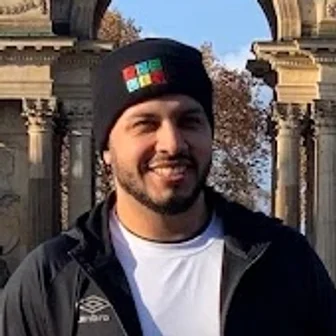
I'm a technical support engineer who builds tools for the people around me.
For 9+ years I've troubleshot enterprise Windows and virtualization: at Tek Experts (2017–2018), at Citrix (2018–2022, where I was promoted to Senior and recruited into Priority Support), and at Microsoft (2022–present, Windows Directory Services). I'm the formal subject-matter expert for slow-logon investigations and Active Directory performance, and I often lead the technical side of large customer escalation calls.
Along the way I build things: LabAssistant, a Hyper-V lab deployment tool (I trained about 100 engineers on it, and about half adopted it), diagnostic scripts, reproducible training labs, and about 25 formal training sessions.
I completed all coursework for a Software Engineering degree at Universidad Fidélitas in December 2025. Graduation is pending the university's community-service requirement.
I've always been the person people come to when they're stuck.
Tek Experts · 2017–2018
I started in March 2017 at Tek Experts, supporting Microsoft's Windows customers on the Performance team. That team was quieter than its neighbors, while Directory Services was overloaded, so when my manager offered me half-time training there, I took it. A month later I asked to move over completely: I'd be more useful where the workload was, and I saw Active Directory as the stronger long-term path, even if it meant busier days. I also went to the overloaded User Experience team on my own and learned Remote Desktop Services so I could take some of their cases. That RDS experience is what got Citrix's attention.
Citrix · 2018–2022
At Citrix I supported XenApp and XenDesktop, later Citrix Virtual Apps and Desktops. A couple of months after training I was finishing my own calls and walking the floor to help whoever was stuck. Eventually the people I'd helped most started doing the same thing when I wasn't around, which is still one of my favorite things I've done. I kept near the top of the team's satisfaction dashboard; my best month was 23 perfect-score surveys on a team of about 23 engineers.
The case I remember most was a NetScaler escalation that had dragged on for two days. The customer was angry and close to walking away. Two managers and a senior escalation engineer came to my desk and asked me to join the call. Within about five minutes I suspected the problem wasn't in Citrix at all. It took network traces and about half an hour to prove that the customer's thin clients never reached NetScaler or StoreFront. The cause was a wrong URL in the thin clients' own configuration. We fixed it together over the next couple of hours, and the survey came back positive.
Around mid-2020 I was promoted to Senior and recruited into Priority Support, working with Citrix's most strategic customers.
Microsoft · 2022–now
I joined Microsoft in March 2022, back in Directory Services. I'm the formal subject-matter expert for slow logon and for Active Directory performance (that one through an evaluation I passed). I'm the informal go-to for Group Policy, user profiles, and PKI. A couple of times a month, I'm the engineer on large customer calls, sometimes 50 to 80 people including executives, often as the only Microsoft engineer. My job there is to take control of the technical direction and move the call toward evidence.
I like to understand problems all the way down: why a Kerberos ticket fails to decrypt behind a CNAME, or why LSASS runs out of ATQ threads before it runs out of CPU. And I like to turn that understanding into something other people can use: about 25 formal slow-logon trainings in 2023–2024 plus around five team-wide talks; scripts that reproduce a known failure on demand, so trainees can investigate it safely; and a formatter that makes Windows Performance Analyzer output readable in case notes.
Building things
LabAssistant started from a simple observation: my colleagues wanted to test Directory Services scenarios, but building Hyper-V labs was getting in the way.
v1 (2022): I built the PowerShell/XAML version myself, without AI, as a hackathon project. Setting up a Windows machine by hand took 30–60 minutes, and a lab with several machines took hours. With v1, each machine was a usable desktop in about a minute on an SSD, using sysprepped images and differencing disks. Machines were deployed one at a time, so a three-machine lab took about three minutes. I trained around 100 engineers on it, and about half adopted it.
v2 (2025–2026): I rebuilt it in C#. I designed it, and AI wrote most of the later code under my direction. It grew from multi-VM provisioning into dependency-aware lab orchestration: domain controllers, domain joins, and child domains, with rollback when something fails.
What v2 taught me: directing AI well is a skill. I learned to catch tests that only checked code shape, and business logic leaking into the UI.
Studies
In December 2025 I finished all my coursework in Software Engineering at Universidad Fidélitas. My capstone was a construction-management backend; I co-built it with one teammate, and I designed its file-security layer: per-project authorization and one-minute Azure SAS links.
What's next
What I want next is to make that my main work: understand how the people around me work, and build the tools that make it better.
Skills
Experiments
Things I build. Each one has a write-up: the problem, my decisions, and what I learned.
LabAssistant
Hyper-V lab automation for my colleagues: from a hand-written PowerShell tool (2022) to a C# lab orchestrator I designed and directed AI to build (2025–2026).
v1: ~100 engineers trained, about half adopted it. v2: dependency-graph orchestration with rollback; never distributed, now discontinued.
anthaguz.dev
This site. A bilingual portfolio with a lab theme, a career trace and a console you can drive by typing.
Designed and directed by me, built with AI assistance (Claude Code). I chose the stack after researching the trade-offs — Astro, React islands, TypeScript, plain CSS.
Construction management backend
University capstone (2025): co-built the backend for a house-building startup and designed its file-security layer.
Per-project authorization in the app, private Azure blobs, and one-minute SAS links. The startup closed after the project, so it never ran in production.
Up next
- Ask Anthaguz — Turn the console into an AI that answers questions about my career — only from public, verified facts.
- AD Diagnostics Analyzer — Paste repadmin, dcdiag or event-log output and get a structured, readable diagnosis.
Career trace
My career, drawn like a performance trace. Click a bar to inspect it.
Microsoft
- Formal subject-matter expert for slow logon and Active Directory performance
- Technical lead on large customer escalation calls — up to 50–80 participants, including executives
- About 25 formal slow-logon trainings (2023–2024), plus team-wide talks to ~70 engineers
- Informal go-to for Group Policy, user profiles and PKI
- Built tools on my own initiative (LabAssistant, a WPA output formatter, reproducible failure labs for training), and an auditing script at another team's request
- Two performance awards (top performer on surveys and KPIs)
Contact
Let's talk.
I like turning people's pain points into tools that make their work better.
LinkedInGitHubhello@anthaguz.dev